Beyond Misunderstandings: How a Simple Health App Brought Our Family Closer
Imagine this: your mom forgets her blood pressure meds, your teen skips lunch to study, and you’re stressed trying to keep track of it all. Health feels scattered—until one little app changed how we communicate. No more guessing, no more worry-filled texts. Just clear, calm updates that brought us closer. This isn’t about data overload—it’s how a simple tool quietly transformed our family’s rhythm, making care feel effortless and connection stronger. It didn’t replace our love or concern, but it gave us a new way to show up for each other without the noise, the nagging, or the anxiety. And honestly? That small shift made all the difference.
The Chaos Before: When Everyone Was Busy but No One Was in Sync
Looking back, I realize we were all trying—really trying—to stay connected. But trying and actually connecting are two very different things. My family had become a network of good intentions, crossed wires, and late-night panic texts. I’d be in bed, phone buzzing: “Did Mom take her meds today?” It was my sister, again. Not angry, just worried. I’d check with Dad, who’d say, “I think so?” But did he really know? And if he didn’t, would he admit it?
Our fridge was covered in sticky notes—med schedules, doctor appointments, grocery lists—most of them outdated. My dad would dutifully write things down, but life happened. A visitor, a phone call, a sudden nap, and the list was forgotten. We weren’t lazy or careless. We were just… overwhelmed. And the more we tried to manage it all through texts and phone calls, the more it felt like we were managing a crisis instead of living life.
What hurt most wasn’t the disorganization—it was how it made us feel. Every “Did you eat?” message started to sound like criticism. Every “Are you feeling okay?” came across as suspicion. My mom would sigh and say, “I’m not an invalid,” and I’d feel guilty for caring. My teen daughter would roll her eyes when I asked about her lunch. “Mom, I’m fine!” she’d say, and I’d wonder—was she? Or was she just saying that to stop the questions?
We weren’t communicating—we were reacting. And every interaction left someone feeling judged, misunderstood, or anxious. I started to dread family group chats. The pings weren’t bringing us together—they were pulling us apart. I knew we needed something better, but I didn’t know what. I didn’t want another chore. I didn’t want more notifications. I just wanted peace. And then, quite by accident, I found it in a place I never expected: a health app I’d downloaded for myself.
Discovering a Different Kind of Health Tool: Not Just for Individuals
I’d been trying to get healthier—more water, better sleep, fewer headaches. So I downloaded a popular wellness app, one that tracked hydration, sleep, and symptoms. At first, it was just for me. I’d log when I drank water, how long I slept, and if I had a headache. Nothing fancy. But one evening, I accidentally shared my headache log with my sister. I didn’t think much of it—just a quick tap. But the next day, she called.
“Have you talked to your doctor about this?” she asked. “You had headaches four days in a row last week. That’s not normal for you.” I was surprised. I hadn’t even noticed the pattern. I’d just thought, “Ugh, another bad day.” But seeing it laid out—dates, times, severity—made it real. And her question wasn’t nagging. It was care. Gentle, informed, and kind.
That moment changed everything. I realized this app wasn’t just a personal tracker—it could be a bridge. Most health apps are built for individuals: lose weight, hit steps, sleep better. But what if we used it to care for each other? Not to monitor, not to control, but to stay connected in a way that felt light, respectful, and low-pressure?
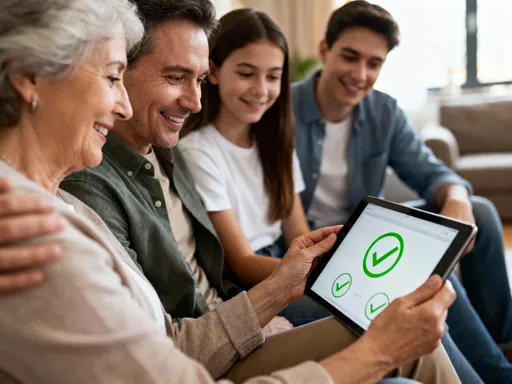
The app allowed private entries with optional sharing. I could log my water intake and choose to share it with my sister. My mom could track her blood pressure and let me see the trends—without me needing to ask every day. No more “Did you take your pills?” texts. Just a green checkmark when she did. Simple. Clear. Kind.
And the beauty was in the control. No one had to share everything. You decided what to show and with whom. It wasn’t about transparency for transparency’s sake—it was about trust. About saying, “I’m okay,” and letting the data speak for you. It turned health from a source of stress into a quiet way of saying, “I’m here. I’m taking care of myself. And I care about you too.”
How We Started: Small Steps That Felt Natural, Not Forced
I didn’t announce some big family health initiative. No meetings, no rules, no pressure. I just started small. I invited my sister to join me in tracking water. We’d send each other little emojis when we hit our goal—drops of water, smiling faces, dancing bottles. Silly? Yes. But it worked. Suddenly, drinking water wasn’t a chore—it was a shared win.
Then I showed my mom how she could log her blood pressure. She was skeptical at first. “I’ve been doing this on paper for years,” she said. But when she saw the app turn her numbers into a clear chart—rising and falling over time—she paused. “Huh,” she said. “I can actually see when it’s higher after I skip my walk.” That visual made it real. It wasn’t just data—it was insight. And it made her feel more in control, not less.
My dad was the toughest sell. “I’m not sick,” he said. “Why do I need to track anything?” I didn’t push. Instead, I showed him how I was tracking my sleep. “Look,” I said, “on days I get seven hours, I’m less grumpy with the kids.” He laughed. Then I asked, “Remember how you always say your afternoon nap helps? What if you tracked it and saw the difference?”
He gave it a try. And when he saw that his energy levels were higher on days he napped—even just 20 minutes—he was hooked. “Well, I’ll be,” he said. “Science proves my nap is useful.” We all laughed. But underneath the humor was something deeper: respect. We weren’t forcing anyone to change. We were giving them tools to see their own patterns, in their own time, in a way that made sense to them.
The key was patience. No guilt. No pressure. Just gentle encouragement and celebrating small wins. When my niece started tracking her meals during exam week, we all cheered. When my cousin logged her first 10,000 steps, we sent confetti emojis. It wasn’t about perfection—it was about participation. And slowly, quietly, we built a rhythm that felt natural, not forced.
Communication That Actually Works: Fewer Texts, More Peace of Mind
Let’s be honest—those “Did you take your meds?” texts? They were draining. For everyone. The sender felt anxious. The receiver felt nagged. And if the answer was “yes,” great. But if it was “I forgot,” now there’s guilt, stress, and a scramble to fix it. Multiply that by a dozen times a week, and it’s no wonder family chats started to feel like crisis management.
The app changed that. Now, when my mom logs her blood pressure and medication, I see a green checkmark. No text needed. No back-and-forth. Just peace of mind. And if something’s missing? I can send a gentle nudge—“Hey, just checking in”—without the weight of a hundred unspoken worries behind it.
My cousin used the same feature for her daughter, who has mild asthma. She set up automatic check-ins: “How are you breathing today?” with simple options—great, okay, not great. Her daughter taps it twice a day. If she selects “not great,” my cousin gets a quiet alert. Not a panic. Not a demand. Just a signal to reach out.
And here’s the thing—she doesn’t feel like she’s spying. Her daughter doesn’t feel watched. It’s not surveillance. It’s support. It’s a way of saying, “I care, and I want to know how you’re doing—on your terms.” And because the system is consistent, it’s not personal. It’s just part of the routine.
Our family conversations have changed too. Instead of starting with “Are you okay?” we start with “I saw you walked 8,000 steps today—how did that feel?” Or “Your water intake’s been great this week—do you feel less tired?” It’s not just about health. It’s about connection. We’re not asking because we’re worried—we’re asking because we’re present.
And the best part? We talk more about life now. With the little health worries handled quietly in the background, we have space for the good stuff—jokes, memories, plans. We’re not just managing illness. We’re sharing life.
When Real Life Gets Hard: How the App Helped During a Health Scare
No app can prevent every health issue. But what it can do—what ours did—was give us early warning and a way to respond together. When my aunt had a minor fall at home, it could have been brushed off. “I just tripped,” she said. “I’m fine.” But the day before, she’d logged feeling dizzy when standing up. She’d almost skipped it—“It was just for a second,” she said—but she’d gotten into the habit of logging small things.
Because we could see that entry, we didn’t dismiss her fall. My cousin said, “You logged dizziness yesterday. Should we call the doctor?” My aunt hesitated, but we gently insisted. The doctor found her blood pressure was dropping too much when she stood—a condition called orthostatic hypotension. With a simple adjustment to her medication, it was managed. No hospital. No serious injury. Just early action.
After that, we used the app’s shared journal to coordinate. One of us would visit and log how she was doing—pain level, mood, appetite. Others could see the updates without needing to call and interrupt her rest. No one felt left out. No one felt overwhelmed by repeating the same details over and over.
When she started physical therapy, we used the app to track her progress. “First walk with the walker today—10 feet!” one of us would log. We’d all react with hearts and clapping hands. It wasn’t just about recovery—it was about being with her, even when we weren’t in the same room.
That experience changed how we saw the app. It wasn’t just for daily habits. It was a lifeline when things got hard. It didn’t replace doctors or care—it made our care more informed, more connected, and more compassionate. And in a moment of fear, it gave us something solid to hold onto: a shared record, a clear plan, and the quiet comfort of knowing we were all in it together.
Making It Work for Any Family: Practical Tips Without the Tech Stress
You don’t need to convert your whole family overnight. In fact, I wouldn’t recommend it. Start small. Pick one habit—just one—that feels manageable. Maybe it’s water intake. Maybe it’s steps. Maybe it’s meal times. Invite one person to join you. Keep it light. Use nicknames. Call your dad “Captain Nap” or your sister “Hydration Queen.” Humor helps.
Respect privacy. This isn’t about sharing everything. It’s about sharing what feels safe and meaningful. Let people choose what to log and who to share it with. Some may only want to share medication logs. Others might love tracking sleep or mood. That’s okay. The goal isn’t uniformity—it’s connection.
Turn on gentle reminders, not loud alarms. You want encouragement, not stress. Pick an app that’s simple, not flashy. You don’t need a hundred features. You need clarity, ease of use, and the ability to share securely. Look for one that allows private entries with optional sharing—no forced visibility.
And remember: it’s not about perfection. If someone forgets to log for three days, no big deal. If your teen logs once a week, celebrate that. The habit matters more than the frequency. Even ten minutes a week of checking in can build trust and reduce anxiety.
Think of it as digital care, not digital control. It’s not about watching someone. It’s about walking beside them. It’s a way to say, “I care,” without saying it out loud. And sometimes, that’s exactly what we need.
More Than Data: How We Grew Closer Without Saying a Word
What surprised me most wasn’t the healthier habits—though we did drink more water, walk more, and take our meds on time. What surprised me was the quiet closeness that grew between us. Seeing my brother log a workout felt like a hug. A shared water reminder became a little “I’m thinking of you.” When my daughter started logging her meals during finals, I didn’t need to ask if she was eating. I could just send a heart.
We stopped assuming the worst. We stopped jumping to conclusions. If Mom didn’t answer her phone, I’d check the app. If her blood pressure was stable and she’d eaten lunch, I could relax. It didn’t mean I cared less—it meant I worried less. And that made me a better daughter, a better sister, a better mom.
Technology didn’t replace our love. It gave our love a new language. One that’s quiet, consistent, and full of small acts of care. It didn’t solve every problem. But it made the ones we faced easier to carry—together.
Today, our family isn’t perfect. We still have busy days, missed calls, and moments of stress. But we also have a rhythm now. A way to stay connected that doesn’t drain us. A way to care that feels light, not heavy. We’re not just healthier. We’re more present. More patient. More together.
And that, more than any number on a screen, is the real win.