How I Broke Into Overseas Investing Without Losing My Shirt
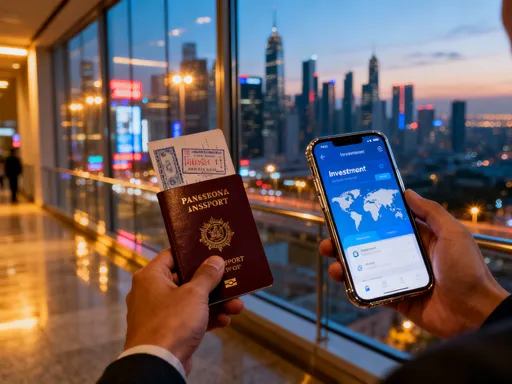
Ever wondered how regular people start building wealth abroad? I was clueless just a few years ago—scared of risks, confused by jargon, and overwhelmed by choices. But after testing different strategies, learning from costly mistakes, and finally finding a solid path, I realized overseas assets aren’t just for the rich. This is my real journey—what worked, what didn’t, and how you can start smart, stay safe, and grow your money across borders without regretting it later.
Why Overseas Assets? The Wake-Up Call That Changed My Financial Mindset
It wasn’t ambition that pushed me to consider overseas investing—it was fear. A few years ago, my home currency lost nearly 15 percent of its value against the U.S. dollar within a single year. Overnight, the savings I’d carefully accumulated felt smaller, less secure. I hadn’t done anything wrong; I’d simply kept all my investments locally, believing that safety meant familiarity. That experience was my wake-up call: putting everything in one economic basket isn’t protection—it’s exposure.
What I began to understand was that global diversification isn’t about chasing higher returns abroad. It’s about reducing risk. When one country’s economy slows, another may be growing. When inflation rises at home, assets priced in foreign currencies might hold their value better. Geographic diversification acts like a shock absorber for your portfolio, smoothing out the bumps that come with local volatility. This doesn’t eliminate risk, but it spreads it across different markets, making sudden losses less likely and less severe.
Another key insight was the role of policy changes. Governments adjust tax laws, central banks shift interest rates, and regulations evolve—all of which can impact local investments overnight. By holding assets in multiple jurisdictions, I gained a layer of insulation. For instance, when my home country introduced new capital gains rules, my overseas holdings remained unaffected. This wasn’t about tax avoidance—it was about prudent risk management. I wasn’t trying to escape my responsibilities; I was building resilience.
Over time, I realized that global investing is not reserved for the wealthy or the well-connected. With the right tools and mindset, everyday investors can access international markets. The key is to shift focus from short-term gains to long-term stability. This isn’t a get-rich-quick scheme; it’s a long-term strategy to protect and grow wealth across economic cycles. My motivation wasn’t greed—it was peace of mind. Knowing that my financial future wasn’t tied to a single economy gave me confidence I hadn’t felt before.
First Steps: How I Set Up My Foundation Without Overcomplicating It
When I first decided to invest overseas, I felt like I was stepping into a complex maze with no map. The terminology alone was intimidating—custodial accounts, foreign withholding taxes, currency conversion fees. My biggest fear wasn’t losing money; it was making a mistake so fundamental that I’d lose access to my funds entirely. So instead of rushing in, I paused and focused on building a strong foundation.
I started by clarifying my goals. Was I investing for long-term growth, retirement, or education? Each goal shaped my time horizon and risk tolerance. I also assessed how much volatility I could realistically handle. This wasn’t just about stomach strength during market swings—it was about ensuring I wouldn’t be forced to sell during a downturn because of sudden cash needs. That led me to prioritize liquidity. I made sure I had an emergency fund in place before moving a single dollar abroad.
Next, I researched brokerage platforms that offered global market access. Not all platforms are equal. Some charge high fees for foreign trades, while others lack reliable customer support or clear reporting. I looked for firms with strong regulatory oversight, transparent pricing, and user-friendly interfaces. I also checked whether they provided access to markets I cared about—North American equities, European bonds, and emerging market ETFs. Security was non-negotiable. I ensured two-factor authentication was available and that the platform was covered by investor protection schemes.
Setting up the account required careful attention to documentation. I provided proof of identity, tax residency, and bank details. Some platforms required a notarized signature or a letter from my local bank. The compliance process took longer than I expected, but it was necessary. I learned that financial regulations exist to protect investors, not just to create red tape. Once my account was active, I linked it to my local bank and tested a small transfer to confirm everything worked smoothly.
One of the most important lessons was understanding cross-border taxation. Different countries have different tax treaties, and some withhold a portion of dividends paid to foreign investors. I consulted a tax advisor familiar with international investing to understand my obligations. I learned that some platforms automatically apply tax credits, while others require manual claims. This step wasn’t glamorous, but it prevented future surprises. By taking the time to set things up correctly, I avoided costly errors and built a system I could trust.
My Entry Strategy: Picking the Right Vehicles to Cross Borders Safely
With my account open, I faced a new question: how to actually invest? The options were overwhelming—individual stocks, mutual funds, exchange-traded funds (ETFs), real estate crowdfunding, and more. I knew I didn’t want to pick single foreign stocks without deep knowledge of those markets. The language barrier, cultural differences, and lack of insider insight made that too risky. I needed a smarter entry point.
I started with ETFs that track broad international indices. These funds offered instant diversification across dozens or even hundreds of companies in multiple countries. For example, one ETF gave me exposure to large-cap companies across Europe, while another included emerging market economies. The beauty of this approach was simplicity. Instead of trying to predict which country would outperform, I gained balanced exposure to entire regions. These funds were also transparent, with low expense ratios and daily price updates.
I also explored global mutual funds offered by reputable financial institutions. These were actively managed, meaning professionals made the investment decisions. While they came with higher fees than ETFs, some had strong long-term track records. I compared performance over ten years, not just the last year, and paid attention to consistency. I avoided funds with high turnover or aggressive strategies that promised outsized returns. My goal wasn’t to beat the market every year—it was to grow steadily over time.
Real estate crowdfunding intrigued me, but I approached it cautiously. These platforms allow small investors to pool money and buy shares in overseas properties. The idea of earning rental income from a London flat or a Lisbon apartment sounded appealing. However, I quickly realized the risks: illiquidity, lack of control, and complex tax implications. Most of these investments require holding periods of five years or more, and exiting early can be difficult. I decided to limit my exposure and treat it as a long-term, secondary holding rather than a core asset.
Direct stock investing came later, and only after I’d gained confidence. I started with multinational companies headquartered abroad but listed on major exchanges. These were easier to research, with English-language reports and global operations. I focused on firms with strong balance sheets, consistent dividends, and clear business models. Even then, I kept position sizes small. Over time, I built a diversified mix of ETFs, mutual funds, and a few individual stocks—each serving a purpose in my portfolio.
Risk Control: How I Avoided Common Traps That Snare New Investors
I made mistakes—some small, some nearly costly. Early on, I bought shares in a foreign company without considering currency risk. When the local currency weakened, my returns in dollar terms were much lower than expected. I hadn’t realized that exchange rate movements could erase gains even if the stock performed well. That taught me to pay attention to currency exposure. Now, I either accept it as part of diversification or use hedged versions of ETFs when available.
Another close call came during a global market dip. News headlines were alarming, and I felt the urge to sell everything and wait for calm. I almost did—but then I remembered my long-term goals. Instead of reacting emotionally, I reviewed my portfolio’s fundamentals. The companies I owned were still strong. The markets had dropped, but not because of permanent damage. I held on, and within months, values recovered. That experience reinforced the importance of discipline. Emotional decisions are the enemy of consistent returns.
To protect myself, I built simple but effective safeguards. I set stop-loss levels—not to time the market, but to limit potential losses if I was wrong about an investment. I also adopted position sizing rules, ensuring no single holding could dominate my portfolio. For example, I limit any single stock to no more than 5 percent of my total assets. This way, even if one investment fails, the impact is contained.
I also learned to distinguish between noise and signal. Global news is constant, but not all of it matters to long-term investors. I stopped checking prices daily and reduced my exposure to financial media that emphasized drama over insight. Instead, I focus on quarterly reports, economic trends, and dividend stability. I review my portfolio every three months, not because I expect to make changes, but to stay informed and intentional.
Maintaining emergency liquidity was another key lesson. I ensure I always have enough cash or near-cash assets to cover unexpected expenses without touching my long-term investments. This separation prevents forced sales during downturns. Risk control isn’t about avoiding all losses—it’s about managing them wisely. By building these habits early, I created a framework that protects my capital and keeps me grounded.
Gaining Ground: Real Growth Through Consistency, Not Luck
After two years of disciplined investing, I began to see real progress. My portfolio didn’t double, and I didn’t get rich overnight. But I achieved steady, measurable growth—around 6 to 7 percent annually after fees and currency adjustments. More importantly, the growth was consistent. Even during volatile periods, my diversified holdings helped smooth the ride.
The real power came from compounding. Reinvesting dividends, even small ones, added up over time. A 3 percent dividend yield, reinvested annually, can significantly boost total returns over a decade. I also benefited from minimizing fees. High-cost funds and frequent trading eat into returns, so I focused on low-expense-ratio ETFs and avoided unnecessary transactions. Over time, these small advantages compounded into meaningful gains.
One of the most effective practices was regular rebalancing. Every six months, I reviewed my asset allocation. If one region had grown too large, I sold a portion and reinvested in underweight areas. This forced me to ‘buy low and sell high’ systematically, without relying on market timing. For example, when U.S. markets outperformed, I reduced exposure slightly and increased allocations to undervalued European or emerging market funds. This kept my risk profile aligned with my goals.
I also learned to adjust only when fundamentals changed, not because of short-term noise. When a country’s economy showed signs of structural weakness—like rising debt or declining productivity—I reconsidered my exposure. But I didn’t react to temporary setbacks. Patience became my greatest ally. Growth didn’t come from brilliant insights or lucky bets—it came from showing up consistently, staying diversified, and avoiding big mistakes.
Practical Tips I Wish I’d Known Before Starting
Hindsight is always clearer. Looking back, I see several mistakes I could have avoided. One was overtrading. Early on, I made small, frequent trades, thinking I was optimizing. But each transaction came with fees and tax implications. I soon realized that simplicity beats complexity. Now, I automate monthly contributions and let them grow. This dollar-cost averaging reduces timing risk and builds discipline.
I also underestimated the impact of taxes. I didn’t realize that some countries withhold taxes on dividends paid to foreign investors. For example, France withholds 30 percent on dividends unless you file for a reduced rate under a tax treaty. I lost money because I didn’t know this. Now, I research withholding tax agreements between my home country and investment destinations. I also keep detailed records of all transactions, which makes tax filing easier and helps me claim eligible credits.
Time zone differences were another oversight. Markets in Asia and Europe close when I’m asleep. I once placed an order late in the evening, only to realize it wouldn’t execute until the next business day. This delayed my entry and slightly changed my purchase price. Now, I plan trades in advance and use limit orders to control pricing. I also use market alerts to stay informed without being glued to my screen.
Perhaps the most important tip is this: never invest in anything you don’t fully understand. I once considered a structured product that promised high returns with ‘limited risk.’ It sounded too good to be true—and it was. After reading the fine print, I realized the risks were complex and not fully disclosed. I walked away. This rule has protected me more than any strategy. Clarity is safety. If I can’t explain an investment to a friend in simple terms, I don’t buy it.
Building a Sustainable Global Portfolio: Lessons for the Long Run
Overseas investing has evolved from a daunting experiment into a core part of my financial life. It’s no longer about escaping my home economy—it’s about strengthening my overall resilience. My portfolio now includes assets across North America, Europe, and select emerging markets, each serving a strategic role. Some provide growth, others offer income, and a few act as hedges against local risks.
The biggest shift has been in mindset. I no longer see investing as a series of bets. It’s a process—a disciplined, repeatable routine built on research, diversification, and patience. I don’t need to predict the future. I just need to stay prepared. This approach has given me confidence during uncertain times and kept me from making rash decisions.
Global investing isn’t a one-time decision. It requires ongoing attention—monitoring economic trends, reviewing tax rules, adjusting allocations as life changes. But the effort is worthwhile. By spreading risk, staying informed, and acting with intention, I’ve built a portfolio that can endure market cycles, currency shifts, and policy changes.
For anyone considering this path, my advice is simple: start small, learn continuously, and prioritize safety over speed. You don’t need a fortune to begin. You need clarity, caution, and consistency. Overseas investing isn’t about getting rich quickly—it’s about building lasting financial security across borders and generations. And that, I’ve learned, is the only kind of wealth worth pursuing.